Folding Music Stand Checklist: What to Test Before Rehearsal or a Gig
A folding music stand is quiet equipment until it is not. The desk tilts halfway through a page turn, one leg walks across the riser, or the bag strap gives way in a doorway. None of these failures is mysterious. Most are visible before the downbeat if you know where to look.
Run this check at home, in the band room, or beside the car before you carry the stand inside. It takes a few minutes, and it is far less embarrassing than asking the second violinist to hold your music while you crawl under the stand for a dropped pin.
Begin with the joints, not the desk
Open the stand fully and close it again once before you check anything else. You are listening for grit, feeling for wobble, and watching for parts that do not return to their resting position. A folding stand depends on a handful of small joints; when one loosens, the whole stand feels vague.
Do this twice, once slowly and once at normal speed. The slow pass reveals a bent hinge or a spring that is not seated. The faster pass shows you what will happen when you are in a hurry after rehearsal. If the stand catches, grinds, or needs a wiggle to fold, deal with it now rather than discovering the problem in a crowded hallway.
What to check at each joint
- Desk hinge: The center hinge should hold the two halves level. If the desk sags when you press gently, tighten the friction knob or screw if your model has one. If the hinge is riveted and the sag remains, retire the stand.
- Locking collar: The height collar should click, snap, or tighten firmly. A collar that slips under light pressure will drop during a long rehearsal.
- Leg pivots: Spread the tripod fully. The legs should move evenly, without one arm lagging or scraping. Bent leg arms are easy to spot when the stand is upside down.
- Springs and clips: Any spring-loaded page clip or desk tab should return on its own. If it stays bent, it will catch on the bag or fail when you need it.
A joint that needs constant retightening is a stand waiting to fold at the wrong moment. Keep a small hex key or screwdriver in your bag if your stand uses one, but do not rely on tape to solve a cracked load-bearing part. Tape hides the symptom; it does not restore the strength of the joint.
Set and test the desk angle
Set the desk to the angle you actually use, not the angle that looks tidy in the bag. Most players read best with a slight tilt, but the right angle depends on whether you sit or stand, whether you use a folder or single sheets, and whether you read from a tablet. The test is simple: put your real music on the stand, open it to a busy page, and turn a page.
The page-turn test
With the stand at playing height, load your folder or tablet. Turn two pages, then tap the top edge gently. The music should stay where you put it. If pages slide, the desk may be too flat, the bottom ledge may be too shallow, or the surface may be too smooth for the folder you use. Adjust the angle first, then add clips if needed.
Check the center seam as well. The two halves of a folding desk should meet evenly. A raised seam catches pages; a gap lets a pencil disappear. If the desk has a lip or shelf, confirm it is folded out and locked. That small ledge is what keeps a heavy folder from sliding into your lap.
For outdoor gigs, wind changes the calculation. A steeper desk can shed wind, but it also makes pages easier to lift. Use strong clips, keep the desk low enough to be stable, and test the setup with the music you will actually use. A stand that behaves perfectly with one sheet can feel like a sail with a thick folder.
Check the feet and base before you trust the stand
Rubber feet are the first parts to disappear and the last parts anyone notices. Look at all three feet, or all four if your stand has a four-point base. Missing caps, cracked rubber, and packed-in grit all reduce grip. On a polished stage floor, a worn foot can slide an inch at the worst possible time.
Stability checks
- Set the stand on a hard, level floor and spread the legs fully.
- Press gently on one corner of the desk. All feet should stay in contact with the floor.
- Nudge the top third of the stand with your hand, not your body weight. It should flex slightly and settle, not rock or walk.
- Repeat on carpet if that is what the venue uses. Carpet hides a short leg; a hard floor reveals it.
- Check that the leg braces or locking tabs are engaged, not merely resting against the leg.
A stand that rocks on a level floor will rock more on a stage riser. Replace missing feet before the gig if you can. If the base is bent or a leg brace is cracked, swap stands. This is not a place for a temporary fix.
Weigh it in playing condition
The weight printed on a product page is only part of the story. Weigh the stand as you actually carry it: with the folder, tablet, clips, pencil, and small accessories in the bag. A light stand with a heavy tablet mount can become top-heavy at full height. A heavier stand may feel secure on stage but tiring on a long walk from the car.
Set the stand at your normal playing height and load it. If the desk tips forward or the whole stand feels light at the base, lower the height or move the load lower. If you use a tablet, test the setup at home with the tablet mounted at the angle you expect to use. Try it in both portrait and landscape if you switch orientations during a set. A top-heavy tablet turns a light stand into a lever, so keep the weight centered over the tripod and lower the desk when you can.
Test the bag, strap, and carry system
A good stand can still fail on the way to the gig if the bag is the weak link. Zip and unzip the bag fully, then tug gently on the seams and the strap attachment points. The strap should be attached to reinforced fabric, not just a single line of stitching. If the stand has a shoulder strap, load the bag and carry it for a minute. A strap that cuts into your shoulder or twists the bag will encourage you to carry the stand carelessly, which is how joints get bent.
Check that the collapsed stand fits without forcing the legs or desk. A bag that is too tight puts constant pressure on the folding mechanism. If you carry a tablet, folder, and accessories in the same bag, make sure the stand is not being used as a divider for heavy items. Put the heaviest items close to your body and keep sharp objects away from the desk surface.
Know when to repair and when to replace
Some problems are routine maintenance: a loose friction knob, a missing rubber foot, a stiff hinge that needs a small drop of lubricant, or a clip that has been bent slightly out of shape. Fix those before they become habits. Other problems are structural: a cracked leg pivot, a bent center hinge, a collar that no longer locks, or a base that has lost its shape. Those are the failures that tend to happen under load, and they are not worth risking on stage.
If a stand has failed the same way twice, even after tightening, stop trusting it. A backup stand in the car or band room is cheap insurance compared with a collapsed desk during a performance. Before the next rehearsal or gig, run the joints, angle, base, weight, and bag checks in that order. It takes only a few minutes, and it turns a quiet piece of equipment into one less thing to worry about.
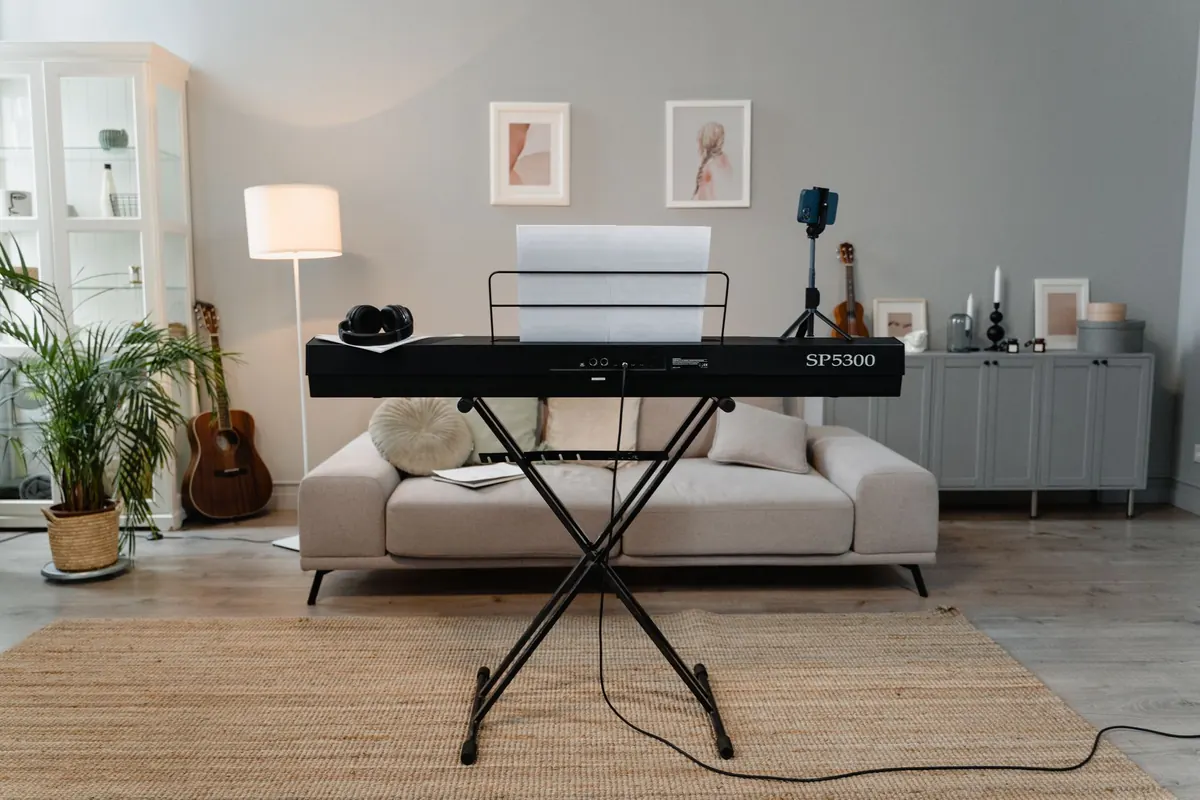
Photo: Tima Miroshnichenko / Pexels

Back-to-School Practice Gear Checklist for Music Students
A practical, season-by-season checklist of the stand, folder, light, metronome, tuner, and bag a music...

Clip-On Music Stand Lights: Brightness, Clamp Fit, and Battery Life Explained
A practical guide to choosing a clip-on music stand light, covering brightness and glare, light colour,...
About Us