
Summer Humidity and Sheet Music: A Seasonal Storage Checklist
Summer is generous to musicians and unkind to paper. Warm air holds more moisture, windows stay open, and a score that lived happily on the shelf all spring can start to curl at the corners by July. The fix is not a museum-grade vault. It is a handful of seasonal habits: watch the room, choose a duller storage spot, use the right folders, and keep sunlight and heat off the page. Use this checklist once at the start of summer, then again when the weather turns sticky.
Why Summer Is Hard on Paper
Printed music is hygroscopic, which simply means it takes in and releases moisture from the air. When humidity rises, paper fibers swell. When the air dries out again, they shrink. The result is cockling—those gentle waves along the page edge—along with tighter bindings, lifted covers, and staples that begin to rust. Heat makes adhesives soft and can warp covers, especially on perfect-bound method books and thick anthologies. Direct sun fades covers, bleaches ink, and makes paper brittle over time.
There is a biological side, too. Damp, still air encourages mold and foxing, those small brown spots that appear on older scores and cheap printouts alike. It is not only antique editions at risk. A working copy left open on a piano bench beside an open window can curl by evening. A stack of choir scores stored in a garage can smell musty by August. The goal is not perfect dryness; it is stability. Paper prefers a steady, moderate room to a dramatic rescue.
Check the Room Before You Check the Shelves
Before you buy another box, spend a little on a simple hygrometer. A small digital model that reads temperature and relative humidity is enough. Put it where the scores live, not in the next room. Many paper-care guidelines point to a stable middle ground around 45–55% relative humidity, with room temperatures that feel comfortable to you. The exact number matters less than the swing. A room that hits 70% in the morning and 40% by afternoon is harder on paper than a steady 55%.
Use air conditioning or a dehumidifier to take the edge off, but do not aim the vent at the shelf. Check exterior walls with the back of your hand; if they feel cool and damp, move the boxes a few inches away. Keep an eye on window glare, too. A shelf can be dry and still be a bad home if it sits in direct afternoon sun. If the room smells close or the pages feel clammy, that is a signal to improve airflow before you rearrange anything else.
Stability beats perfection: a steady, moderate room is kinder to paper than a dramatic rescue.
Choose a Boring, Interior Storage Spot
The best storage spot is often the least interesting one: an interior closet, a closed cabinet in a hallway, or a shelf away from bathrooms, kitchens, and outside walls. You want a place where the temperature and humidity move slowly. Keep boxes a few inches off the floor and leave some breathing room between them and the wall. Do not push folders tight against the back of a shelf; air should be able to move.
Some rooms are simply wrong for long-term storage. Attics bake. Garages swing between damp and dry. Basements are cool but often humid. Sunrooms and conservatories are beautiful and brutal. A piano top near a window is convenient, but it is also a landing pad for heat and light. If you must use a less ideal room, keep the scores in closed archival boxes and check them monthly rather than once a season.
- Good: interior closet, closed cabinet, shelf in a shaded hallway, drawer away from plumbing.
- Avoid: attic, garage, basement, kitchen, bathroom, sunroom, floor level, and any spot in direct sun.
- Improve: raise boxes off the floor, leave wall clearance, and keep the closet door closed during humid spells.
Boxes, Folders, and the Right Kind of Protection
Acid-free folders and archival boxes are the quiet heroes here. They buffer paper from the air and keep loose scores from sliding into each other. Ordinary cardboard can off-gas and stain over time, so save it for short-term transport. Avoid sealed plastic tubs unless you monitor them; a bin that traps damp air can turn into a small greenhouse. If plastic is all you have, leave a little ventilation and use a rechargeable desiccant pack, keeping it in a small open container so it never touches the paper.
Store loose sheets flat in acid-free folders. Keep binders and heavy volumes upright, but do not overfill the shelf; leaning and cramming cause bent corners and broken spines. Fragile programs and handwritten parts can go in archival sleeves. Silica gel is useful in a small, closed box, but it needs recharging, and it should never be piled against scores. Label the outside of each box with a pencil or removable label so you are not digging through pages every time you need a part.
A simple layering system
- Sort scores into keep, practice, and loan piles; remove duplicates and damaged copies you no longer use.
- Place loose sheets in acid-free folders, one folder per project, genre, or ensemble.
- Stand folders and binders in an archival box or on a shelf with a little breathing room.
- Add a desiccant pack only to small, closed boxes, and check it monthly.
- Label the box and note the date so you can see when it was last reviewed.
Heat, Sunlight, and Daily Practice Habits
Sunlight is the fastest form of damage. It fades covers, yellows paper, and dries out bindings until they crack. Move the music stand out of the window’s path, or close the blinds during the brightest hours. Do not leave a score open on the piano after practice; close it, put it back in its folder, and put the folder away. The same goes for the car. A score left on the back seat during a hot afternoon can warp before you reach the gig.
For outdoor rehearsals and summer concerts, make a working copy and leave the original at home. Keep hands dry before handling paper, especially if you have been playing in the heat. If a page does get damp, separate it from the stack and air-dry it flat with a fan. Do not iron it, and do not use a hair dryer; rapid heat can do more harm than the moisture. A little patience and moving air are usually enough.
A Monthly Summer Checklist
Run through this list on the first of each month, or whenever the weather turns unusually muggy. It takes less time than sorting a single gig folder.
- Read the hygrometer in the morning and late afternoon; note any big swings.
- Open the storage closet and smell the air. A musty scent means moisture is lingering.
- Inspect a few scores for curled edges, rusted staples, lifted covers, or small brown spots.
- Move boxes off the floor and away from exterior walls if they have crept back.
- Recharge or replace desiccant packs, and check that they are not touching paper.
- Wipe shelves with a dry cloth; do not use wet wipes near paper.
- Check window glare and move any score that sits in direct sun.
- Clear clutter from the piano bench and music stand so air can circulate.
The Ten-Minute Seasonal Reset
Pick a dry, mild morning and clear one shelf at a time. Wipe the shelf, inspect the scores, replace tired folders, and put the boxes back with a little space around them. Set the hygrometer where you can see it, label the boxes, and put a monthly reminder on your phone. You do not need to baby every page. You need to make the room less interesting to moisture, heat, and light. Then close the closet door, tune up, and get back to playing.
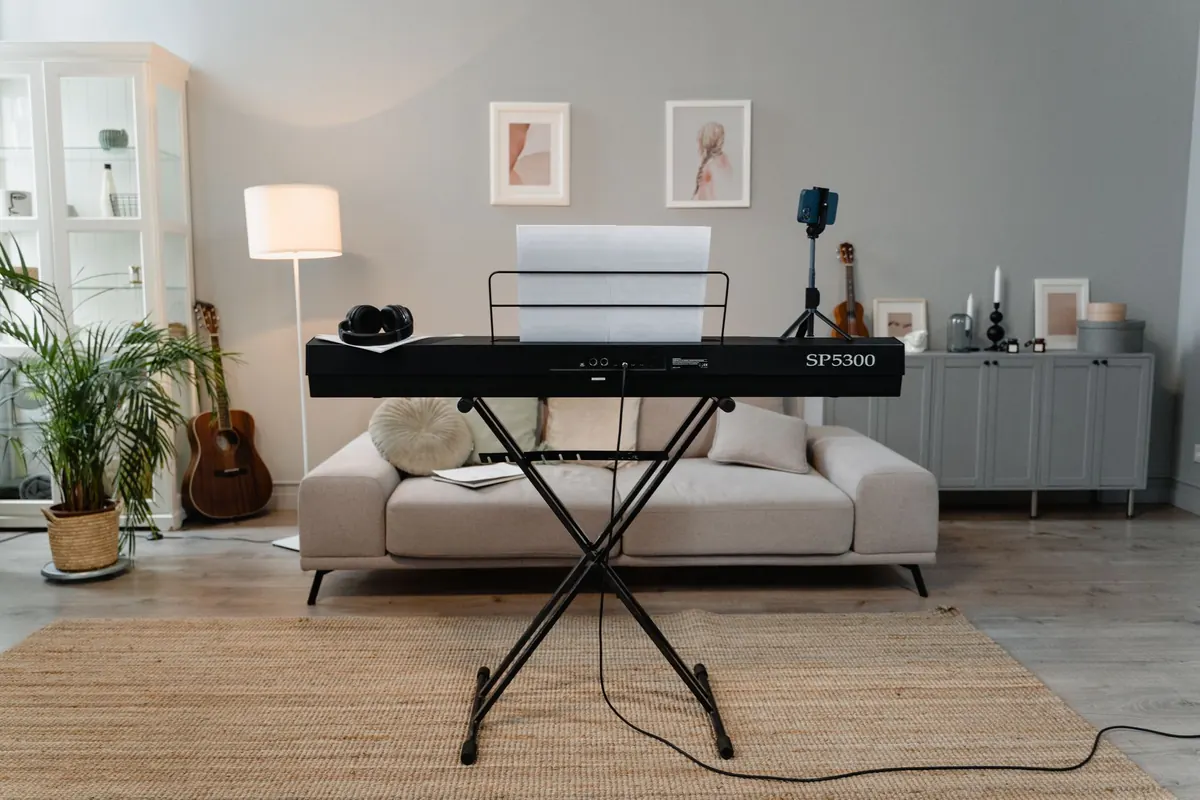
Photo: Suzy Hazelwood / Pexels
Folding Music Stand Checklist: What to Test Before Rehearsal or a Gig
A practical pre-rehearsal and pre-gig check for folding music stands, covering joints, desk angle, feet,...

Back-to-School Practice Gear Checklist for Music Students
A practical, season-by-season checklist of the stand, folder, light, metronome, tuner, and bag a music...
About Us